 VapeWholesaleHub
Understanding Mech Mod Manufacturing From the Inside — UK and Ireland
There is no clever trick to buying mech mod well. There is a short list of things worth checking and a long list of things that distract from them. This page is an attempt at the short list.
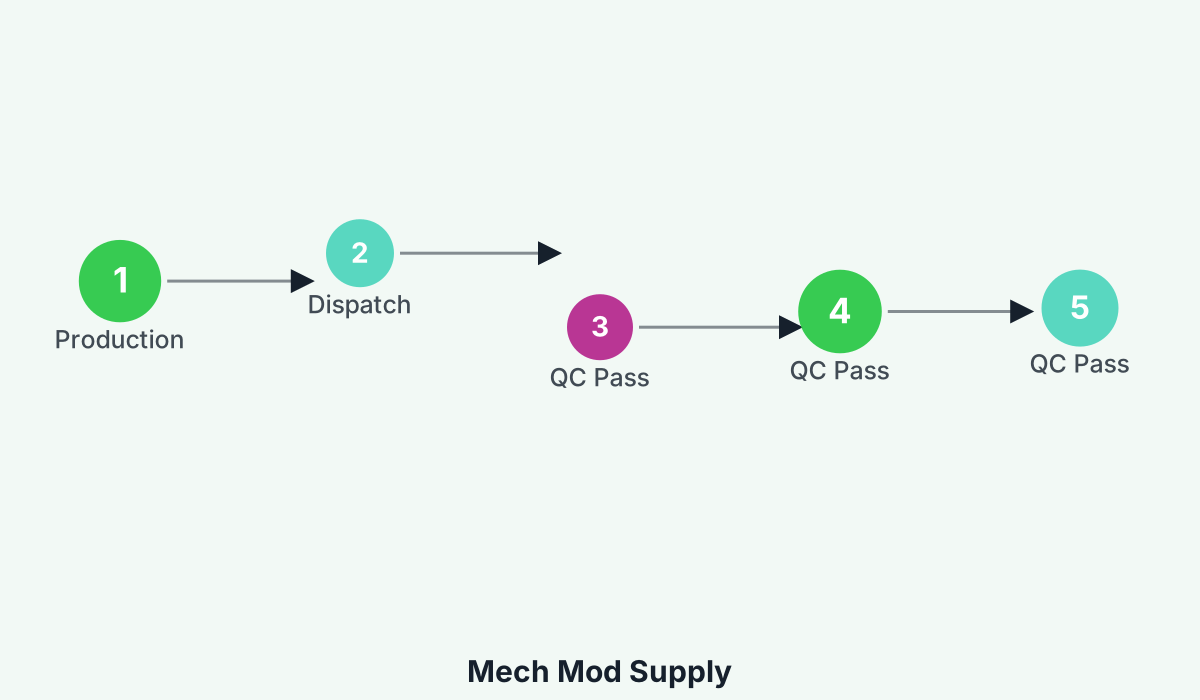
Merchandising and Listing Tips
Keep the mech mod range tidy. A half empty shelf reads as a dying line, and customers interpret it that way faster than any signage can correct.
Keep the mech mod range tidy. A half empty shelf reads as a dying line, and customers interpret it that way faster than any signage can correct.
Quality Control in Practice
Most defects in mech mod are not dramatic. They are loose tolerances, a slightly thin seal, a mouthpiece that clicks. Left alone they turn into leak complaints, which are the single most common reason a retailer drops a line.
Keep a photo record of every mech mod approval sample. Written descriptions age badly; a dated photograph next to a delivered unit settles most arguments in seconds.
- Plan the switch from air to sea freight before you need it.
- Ask how the factory measures puff count, then compare like with like.
- Model landed cost, not ex-works price, when comparing quotes.
- Keep sealed retained samples from every production batch.
- Confirm the current customs classification with your own broker.
Market Signals
Expect mech mod packaging requirements to keep tightening. Designs that leave room for additional labelling age better than tight layouts that need a full reprint to comply.
Assortment rationalisation is the quiet trend in this category. Shops that cut their mech mod range from twelve lines to five well chosen ones often report higher total sales, not lower.
The Specification That Matters
Ask any factory for the same mech mod sample twice, three months apart. If the second sample drifts, the production line is running without statistical control and your reviews will drift with it. Consistency over time is a more useful signal than a single good sample.
| Product category | Pod system |
|---|---|
| Resistance band | 0.8 - 1.0 ohm |
| Capacity tolerance | +/- 3% |
| Puff count method | Machine cycle 2s on / 18s off |
| Master carton | 240 units |
| Carton weight | 9.7 kg |
| Shelf life | 18 months |
| Storage | 15-25 C, dry, away from direct light |
Getting Mech Mod to Your Warehouse
Plan the mech mod customs paperwork at the same time as the order, not when the goods are on the water. A missing document costs more in demurrage than the entire freight saving from a cheap forwarder.
Air freight makes sense for a first mech mod order when you need to test demand quickly, but almost every steady programme moves to sea freight once volumes stabilise. Planning that switch early avoids a painful margin squeeze later.
What Mech Mod Really Costs Landed
Discounting mech mod to win shelf space tends to reset customer expectations permanently. Volume support in kind, such as display material, usually costs less in the long run.
When you model mech mod pricing, build in a realistic shrink figure. Even a well run line loses a small percentage to damage, expiry and sampling. Pretending that number is zero is how a healthy looking margin turns negative.
Indicative reference points for planning purposes: entry tier from USD 1.73 per unit at 500 units, mid tier at USD 1.84, and volume tier at USD 0.51 for full container quantities. These figures move with specification, packaging and freight, so treat them as a shape rather than a quote.
Practical Checklist
- Confirm the current customs classification with your own broker.
- Ask how the factory measures puff count, then compare like with like.
- Keep sealed retained samples from every production batch.
- Start with a mixed carton and let your own sell-through decide.
- Plan the switch from air to sea freight before you need it.
- Agree the tolerance band in writing before approving artwork.
Frequently Asked Questions
What if a batch does not match the sample?
Keep the retained samples from the approval stage. If a delivered batch measurably differs, we compare against the retained set and resolve it against the production record. This is why we insist on sealed retained units from every run.
How long does a mech mod order take to arrive?
Production typically takes ten to eighteen working days after artwork approval, and transit depends on the method you choose. Air express is fastest, sea freight is cheapest at volume. We confirm both at quotation so there is no surprise later.
Do you hold stock for regular customers?
For established programmes we can reserve production slots and, in some cases, hold finished mech mod stock against a forecast. It removes most of the lead time risk from a reorder and is worth discussing once volumes are stable.
Can you match an existing product I already sell?
Often yes, provided we can measure it properly. Send a physical sample and we will report back on what can be matched, what will differ slightly, and why. An honest gap is more useful than a vague promise.
Next Step
Send us your current mech mod specification even if you are not planning to move suppliers. A second read of a document you use every month is usually worth the ten minutes.
Related Reading
- How Mech Mod Performs in Different Climate Conditions — 2026 Edition
- Mech Mod Handling, Labeling and Regulatory Paperwork — the Middle East
- Mech Mod Returns Data and What It Is Telling You — Specialist Vape Shops
- Mech Mod Approval Workflow From Sample to Shipment — Latin America
- Mech Mod Regulatory Change Monitoring — Three Price Tiers
- Mech Mod Packaging Waste and Recycling Options — Warehouse Teams