 VapeWholesaleHub
Mech Mod Humidity Control in Coastal Warehouses — Oceania
This page is written for the person who has to sign the purchase order, not for the person who designed the packaging. If you are weighing up mech mod right now, the sections below follow the order in which the real decisions tend to arrive.
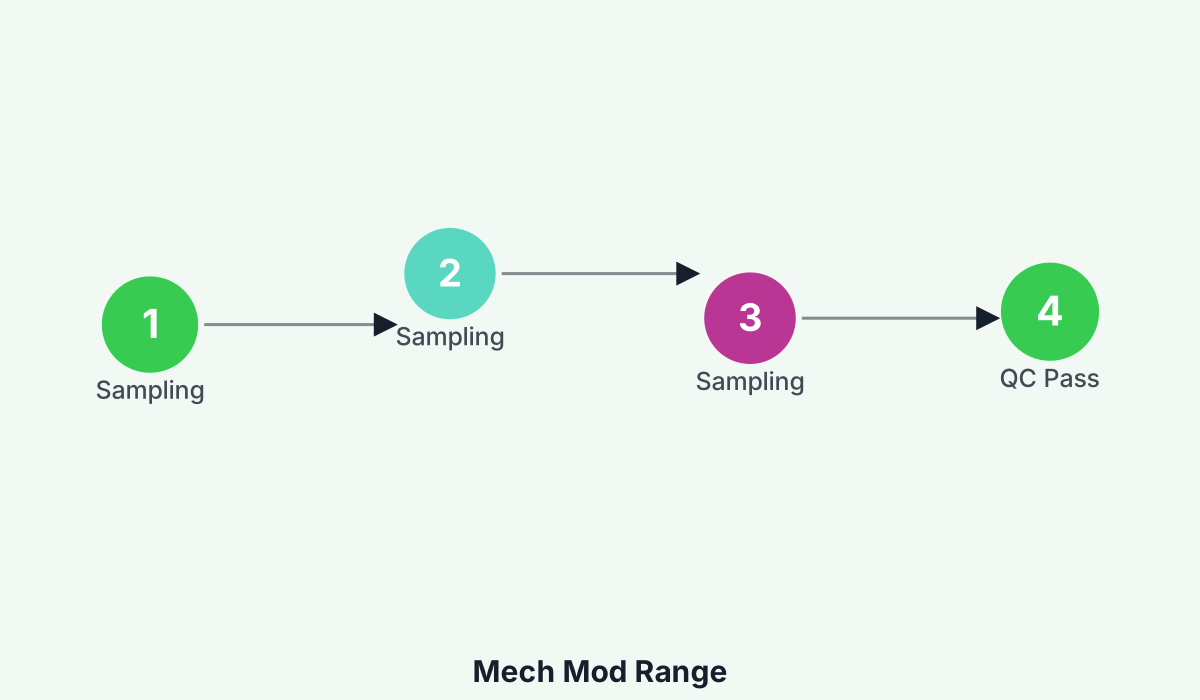
Inspection Before Dispatch
The cheapest quality control step is a retained sample. Keeping three sealed units from every mech mod batch costs almost nothing and turns any dispute into a simple comparison instead of an argument over photographs.
AQL sampling gets a lot of attention, but for mech mod the more useful habit is simply measuring the same three things on every single batch. Trend lines catch problems that pass/fail checks miss.
- Ask how the factory measures puff count, then compare like with like.
- Agree the tolerance band in writing before approving artwork.
- Confirm the current customs classification with your own broker.
- Model landed cost, not ex-works price, when comparing quotes.
- Check carton dimensions against your freight quote before confirming.
Selling Mech Mod at Store Level
Use your mech mod staff training time on the two questions customers actually ask. Anything more detailed gets forgotten by the second shift.
Use your mech mod staff training time on the two questions customers actually ask. Anything more detailed gets forgotten by the second shift.
Where Demand Is Heading
Assortment rationalisation is the quiet trend in this category. Shops that cut their mech mod range from twelve lines to five well chosen ones often report higher total sales, not lower.
Where Mech Mod Sits in the Range
Range decisions for mech mod should start from shelf space, not from a supplier catalogue. Count the facings you actually have, then decide how many of them this line deserves against what it currently earns.
Category planning for mech mod works best when you map it against three shopper types: the restocker who already knows what they want, the switcher who wants something stronger, and the explorer who buys on flavour name alone.
Reading a Mech Mod Spec Sheet
Specification sheets are where a mech mod deal is won or quietly lost. Two samples can look and taste the same while using different coil wire, different wicking density and different tolerances on the mouthpiece. Those details decide how the unit behaves in week three rather than minute three.
| Product category | Accessory |
|---|---|
| Resistance band | 1.2 - 1.4 ohm |
| Capacity tolerance | +/- 5% |
| Puff count method | Declared by capacity |
| Master carton | 240 units |
| Carton weight | 5.1 kg |
| Shelf life | 18 months |
| Storage | 15-25 C, dry, away from direct light |
Modelling a Healthy Margin
When you model mech mod pricing, build in a realistic shrink figure. Even a well run line loses a small percentage to damage, expiry and sampling. Pretending that number is zero is how a healthy looking margin turns negative.
Discounting mech mod to win shelf space tends to reset customer expectations permanently. Volume support in kind, such as display material, usually costs less in the long run.
Indicative reference points for planning purposes: entry tier from USD 2.34 per unit at 500 units, mid tier at USD 1.68, and volume tier at USD 1.28 for full container quantities. These figures move with specification, packaging and freight, so treat them as a shape rather than a quote.
Practical Checklist
- Ask how the factory measures puff count, then compare like with like.
- Agree the tolerance band in writing before approving artwork.
- Write the complaint threshold into the order terms.
- Keep sealed retained samples from every production batch.
- Start with a mixed carton and let your own sell-through decide.
- Rotate stock by batch code rather than by delivery date.
Frequently Asked Questions
Do you hold stock for regular customers?
For established programmes we can reserve production slots and, in some cases, hold finished mech mod stock against a forecast. It removes most of the lead time risk from a reorder and is worth discussing once volumes are stable.
How long does a mech mod order take to arrive?
Production typically takes ten to eighteen working days after artwork approval, and transit depends on the method you choose. Air express is fastest, sea freight is cheapest at volume. We confirm both at quotation so there is no surprise later.
What if I only need a small first order?
That is normal and sensible. A mixed carton lets you test mech mod in your own market before committing to a production run, and the specification you approve at that stage carries through to larger orders unchanged.
What information do you need to quote?
Target specification, approximate quantity, destination and any packaging requirement. With those four we can usually come back with a costed option the same working day rather than a request for more information.
Can I visit the production facility?
Yes, and we encourage it for larger programmes. Visits are most useful when you already have a draft specification, because you can then check the specific processes behind the numbers you care about.
Next Step
If you are comparing options right now, send us the specification you have been quoted elsewhere. A side by side reading usually shows where the price difference actually comes from, and that is the most useful first conversation to have.
Related Reading
- Mech Mod Lead Time Buffers That Actually Work — Landed Cost Worked Through
- Mech Mod Sampling Programme: How to Evaluate Before You Commit — Oceania
- Mech Mod Cell and Chip Supply Constraints — Cross-Border Trade
- Mech Mod Insurance Valuation for Held Stock — Three Price Tiers
- Mech Mod Tolerance Bands That Hold Up in Production — the Buying Desk
- Mech Mod Cross Selling With Adjacent Categories — the Middle East